

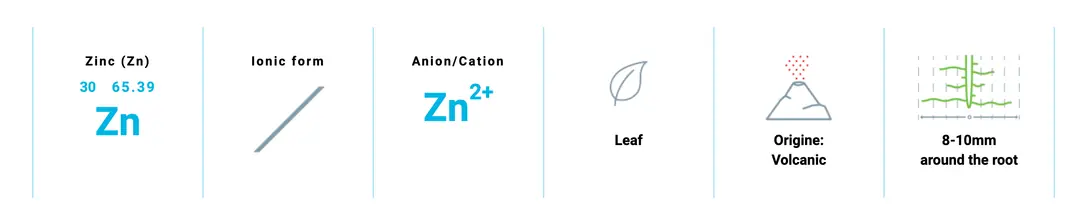
ZINC (Zn)
Zinc deficiency is common in both plant nutrition and human nutrition. Plants suffering from zinc deficiency show stunted growth, especially at the start of the growing season and under cold, wet conditions. It is possible to intervene effectively by targeting sensitive crops and soils with the right zinc fertilizer.
Zn
IMPORTANCE FOR PLANT LIFE
METABOLISM
Like other trace elements, zinc is involved in enzymatic reactions related to carbon fixation (photosynthesis). It plays an important role in cell division, in the structure of ribosomes, and especially in growth mechanisms associated with the auxin hormone.
ABSORPTION MECHANISMS
During the early growth stages, zinc is absorbed passively in proportion to its concentration in the soil solution. In later stages, plants begin to regulate Zn uptake more tightly through their metabolic functions.
INTERACTIONS & SPECIAL FEATURES
Zinc can block iron uptake; however, the reverse is not true—iron does not block zinc to the same extent. Excess phosphorus can inhibit zinc uptake, and the opposite can also occur: additional zinc may suppress phosphorus uptake.
Zinc excess is generally not common in agricultural soils; however, if sewage sludge or industrial compost is applied in uncontrolled and excessive amounts, Zn levels may rise. In such cases, the uptake of iron and phosphorus by the plant becomes more difficult.
ZINC IN SOIL
Zinc content varies greatly depending on soil type. Calcareous (lime-rich) soils and granite-derived soils are generally among the most zinc-poor profiles.
Zinc in sulfate or carbonate form can relatively easily move into the soil solution once applied. Zinc has been mined since the Middle Ages, and its industrial production continues to increase today.
SENSITIVITY TABLE & SYMPTOMS
Zinc deficiency is one of the most common trace element deficiencies and can have serious impacts on yield. In general, the most distinct symptom is interveinal chlorosis (yellowing) on leaves.
EXCESS & REQUIREMENT
In cases of zinc excess, the uptake of phosphorus, iron, manganese, or copper may be blocked, leading to deficiencies of these elements in plant tissues. In other words, excess Zn can disrupt the plant’s overall nutritional balance.
ORIGIN & APPLICATION METHODS
Zinc fertilization can be applied either foliar or soil-based. When immediate plant uptake is needed, sulfate salts are highly effective.
Chelated zinc forms are more stable and more resistant to becoming unavailable to the plant in a short time. Fertilizer formulations aim both to ensure effective assimilation and to create a sustainable Zn supply in the soil throughout the entire growing season.
Application is recommended at the beginning of growth phases when passive uptake is dominant. This is even more critical for species such as flax.
KEY DRIVING FACTORS
ZINC CONTENT IN SOIL
EDTA extraction is a good indicator for measuring zinc in soil. Minimum threshold values can be roughly taken as follows:
- Minimum 5 ppm Zn in alkaline (basic) soil,
- Minimum 4 ppm Zn in neutral soil,
- Minimum 3 ppm Zn in acidic soil.
CLIMATE
Low temperatures—especially in late winter and early spring—tend to reduce Zn solubility in the soil solution for young plants. Light intensity also affects Zn availability; periods when low light (cloudy, gray weather) coincides with low temperature can cause significant changes in zinc availability.
pH
As soil pH increases (alkaline soils), or when pH is raised through recent liming, both the total zinc content in the soil and the amount of plant-available Zn decrease. Therefore, the risk of Zn deficiency is higher in high-pH and recently limed soils.